
Re-wilding
An artist's book

Dear Readers,
A bit of technical information to start with….
A few months ago, I started creating an art journal in a small “carnet de voyage” or artist’s travel sketch book. The pages were collaged with a variety of papers made from several different artistic processes : monotypes, lino prints, drawings, paintings, drawings. It was visually dense, much like our inner worlds can be, a mélange of memory, experience, sensory detail, emotion. My goal was to experiment a bit with putting all these different techniques together in one place and trying to achieve something harmonious that expressed my moody inner landscape.
Once the pages started to fill up, I had the idea to cut them free from their spiral binder and to reassemble them with two small binder rings. In the past, when I made artist’s books, I bound them with thread in a more traditional way. The binder rings were simple to use, and I find a certain utilitarian charm in them. This allowed me to insert blank pages in between each collage, and to add vellum pages as well. I have a deep love of vellum in books. The silly texture and translucence speak to memory, which is often somewhat hazy and dream-like as we call things to mind. I decided to sift through my box of small, previously unused prints and add some photos. The story became richer and felt more true to me, as photography is still the heartbeat of my artistic process.
And then, a poem emerged (in French, though I’ll translate it for you here).
The process of creating something is rarely linear. We start with a thread. then another one gets woven in. And then a few more. What was once flat becomes ripe with substance and meaning, if we can stick with a body of work long enough to let it all emerge.
……………………………………………………………………………………………………………………………………………………..
If you could come up with a single word that expresses an intention you have for the next year or so, what would that word be?
Mine is re-wilding. I’m not sure if this word exists elsewhere or if I made it up (which I’d like to think is the case). I would define re-wilding as becoming the self we once were, the wild child who wanders barefoot in the garden on summer evenings when fireflies are illuminating the edges of everything. It’s a process of coming back into our own, fully inhabiting our bodies, fully accepting and honoring ourselves, fully in communion with the natural world. I’ve shared my thoughts on the notion of "my wild nature" before. This re-wilding comes from the same place, from the same needs.
Trauma, loss, society, expectations, demands, should’s, constraints, regrets, bad choices, not listening to our intuition, ignoring our deepest longings… all of this can lead us astray. All of this can lead us to inadvertently ignore or become detached from our truest selves. But the story doesn’t have to end there. In fact, these things are only the beginning. I think we need to loose our way before we can stumble onto the right path. No matter how painful, we need to lose parts of ourselves in order to become whole as adults. These losses are opportunities, openings. They lead us toward our deepest, most soulful desires. They lead us back into the wild.
Dr. Clarissa Pinkola Estés says:
“And then there are the cravings.. Oh, la! A woman may crave to be near water, or be belly down, her face in the earth, smelling the wild smell. She might have to drive into the wind. She may have to plant something, pull things out of the ground or put them into the ground. She may have to knead and bake, rapt in dough up to her elbows.
She may have to trek into the hills, leaping from rock to rock trying out her voice against the mountain. She may need hours of starry nights where the stars are like face powder spilt on a black marble floor. She may feel she will die if she doesn’t dance naked in a thunderstorm, sit in perfect silence, return home ink-stained, paint-stained, tear-stained, moon-stained.”
― Clarissa Pinkola Estés, Women Who Run With the Wolves
Perhaps it’s the start of a new cycle of life, as I’m now in my 56th year. A new seven-yer cycle is beginning. Perhaps it’s the fact that this coincides with the upcoming seven year anniversary of my hysterectomy. Perhaps it’s that the 18th anniversary of my son’s death is also coming up, which means that I’ve spent as many years without him as I did with him. Perhaps it’s that my hair has grown out (some of you may remember when I wrote about hair and identity), and I am starting to look and feel like my old self again. It’s probably a combination of all of this.
I feel pulled toward the earth, toward the dirt, toward the trees, toward the birds, toward the foxes and the flowers. They call to me. Open spaces call to me. The sea calls to me.
And my little artist book is a reflection of all of this.
…………………………………………………………………………………………………………………………………………………………
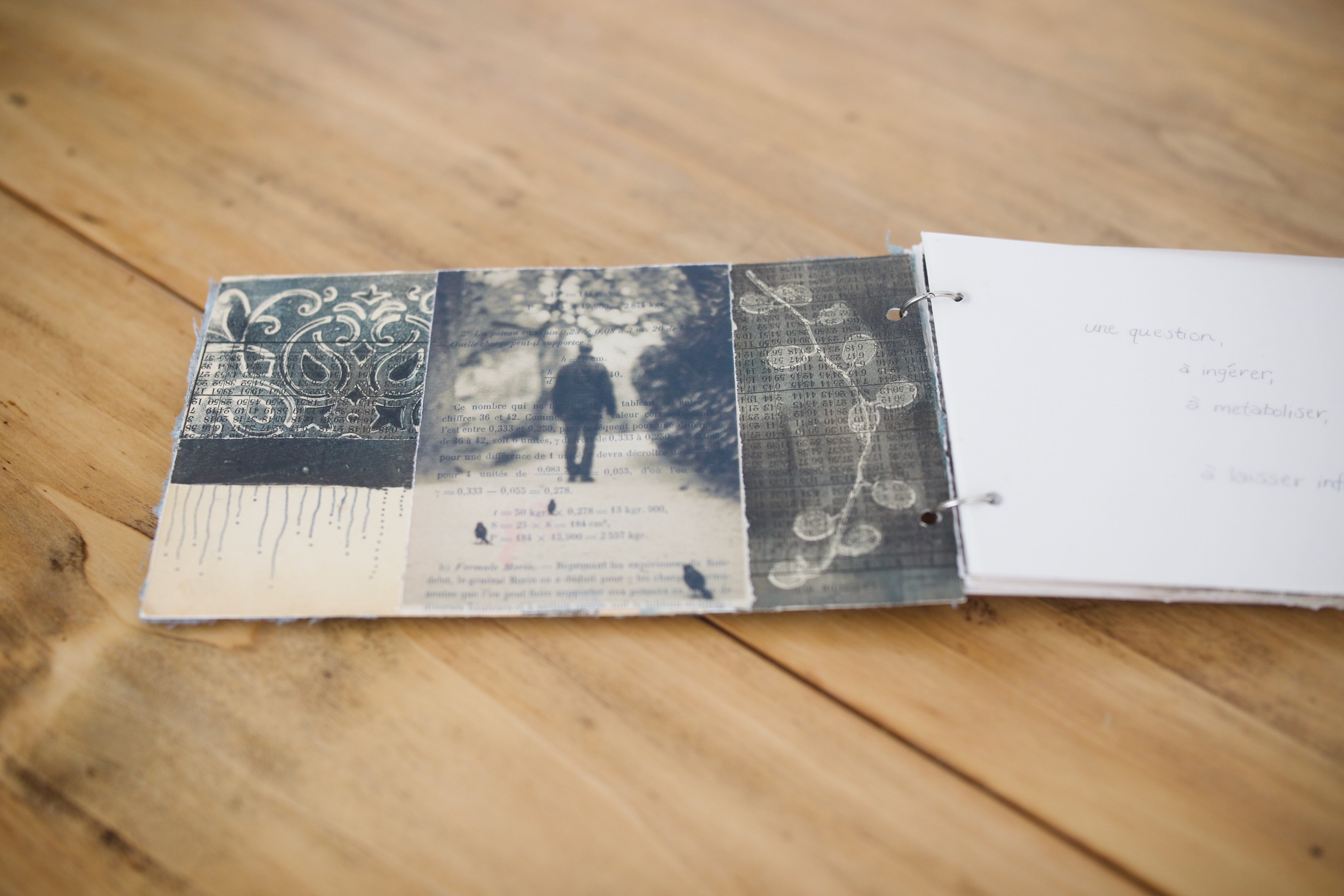
Une question, à ingérer, à métaboliser, à laisser infuser nos vides
(A question to take in, to metabolize, to infuse our empty spaces)
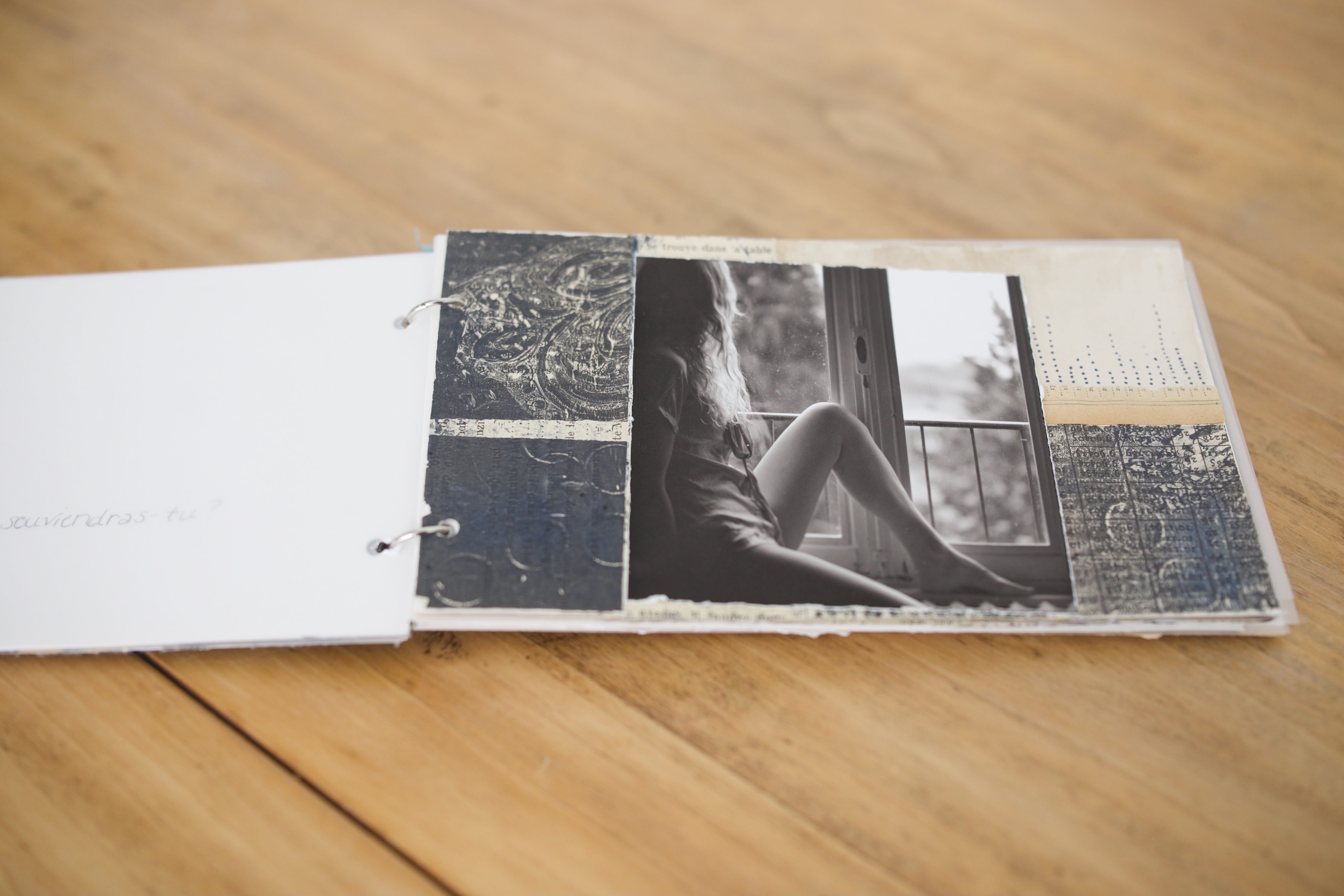
De quoi te souviendras-tu ?
(What will you remember?)
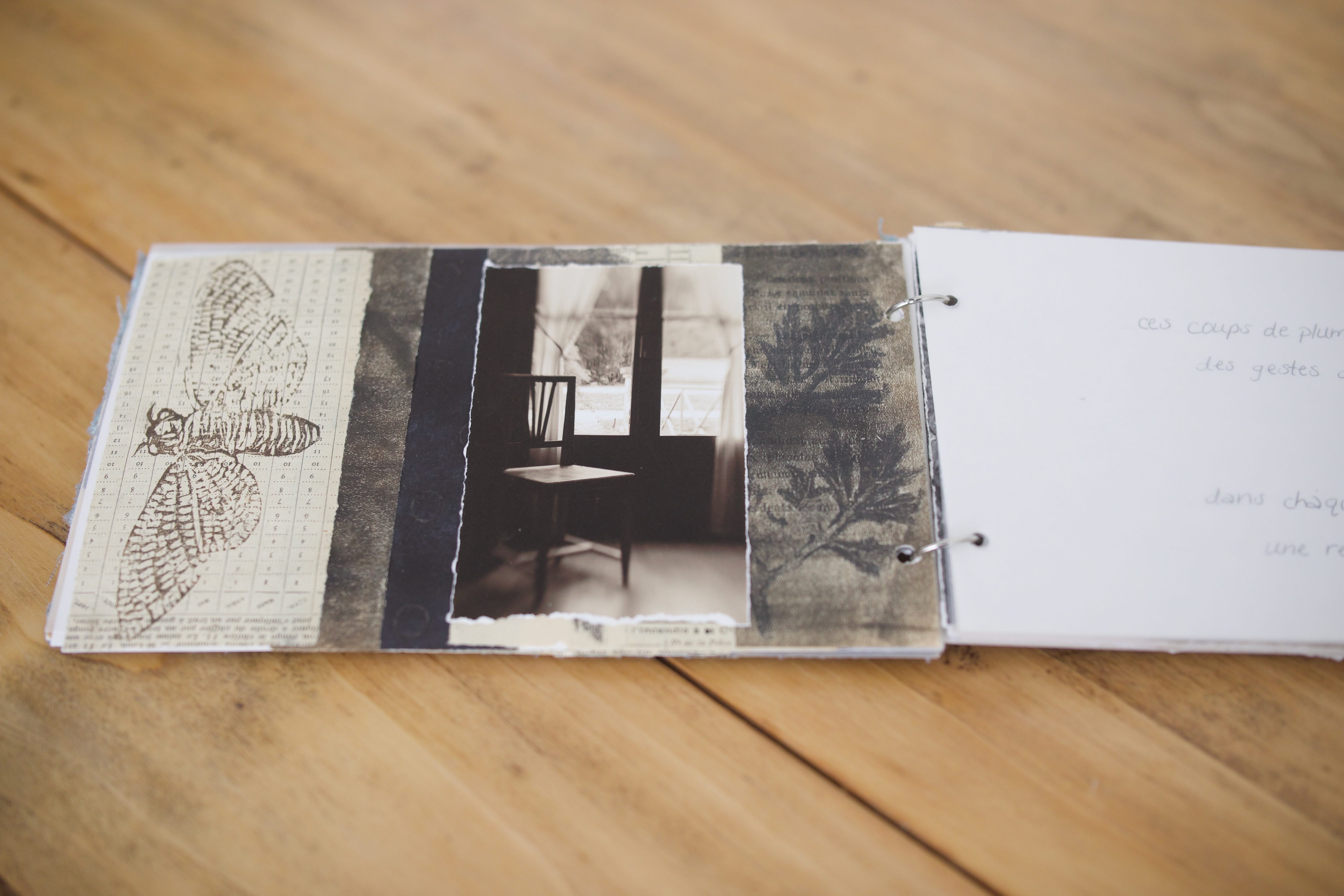
Ces coups de plume, des gestes doux, banals, ou presque…
dans chaque ligne, une renaissance,
(these pen strokes, gentle gestures, banal, or almost…
in each line, a renaissance),
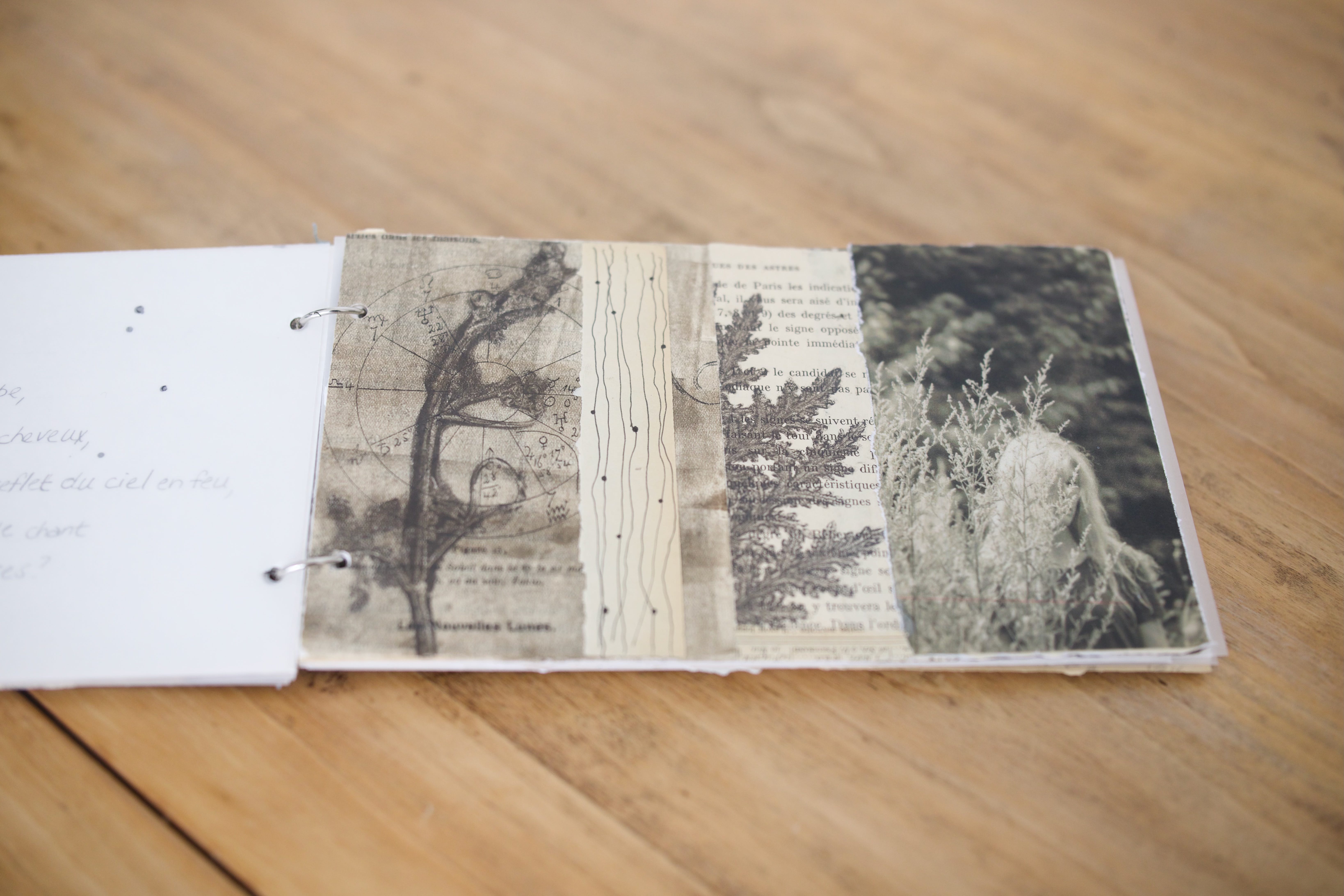
le printemps, allongés dans l’herbe, tes doigts dans mes cheveux, tes yeux gardaient le reflet du ciel en feu, est-ce que tu écoutais le chant des arbres ?
(springtime, laying down in the grass, your fingers in my hair, your eyes held the reflection of the sky on fire, were you listening to the song of the trees?)
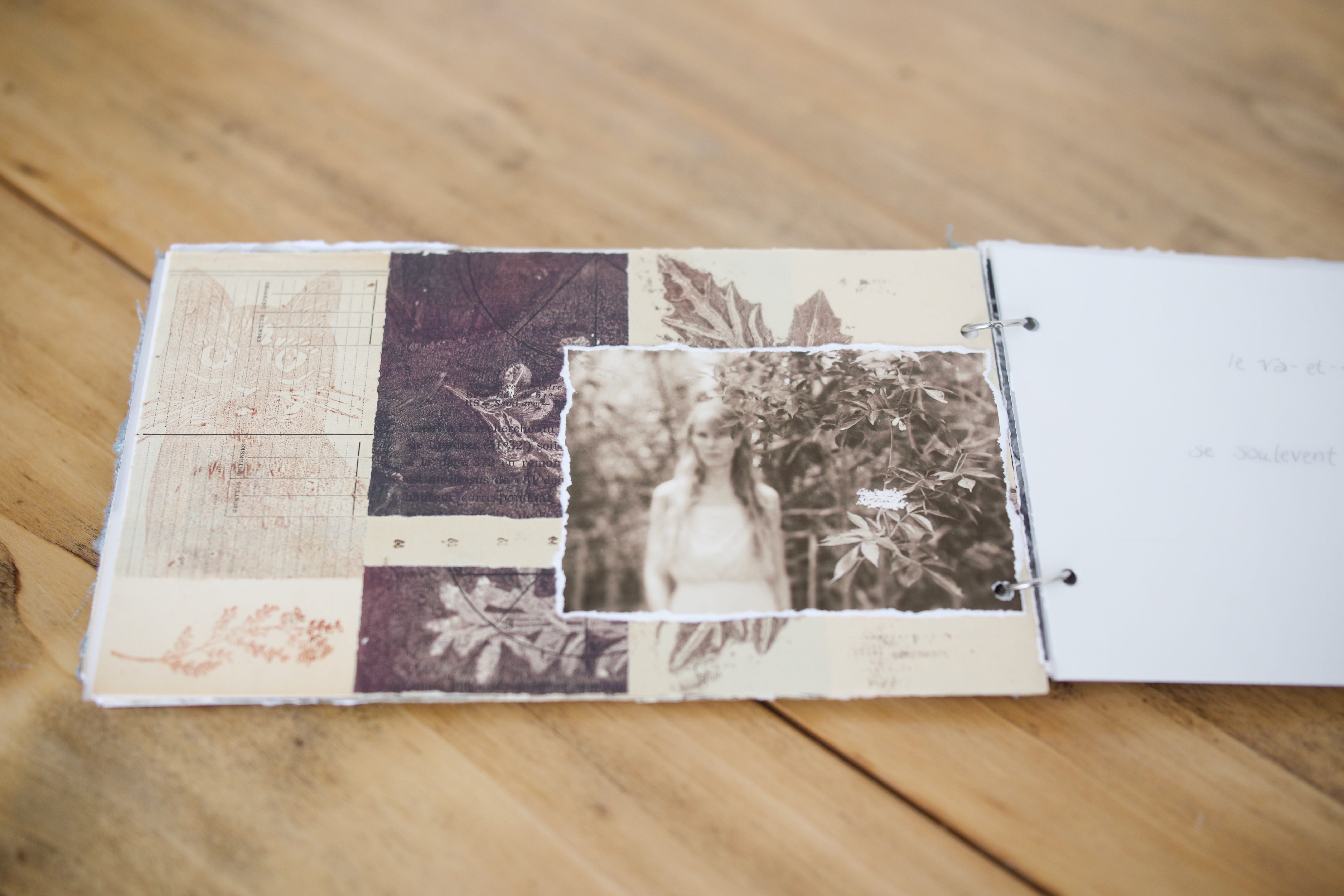
le va-et-vient, des mots se soulèvent et redescendent, derrière eux, une marrée de l’encre noire,
(comings and goings, words rise and fall, behind them, a tide of black ink,)
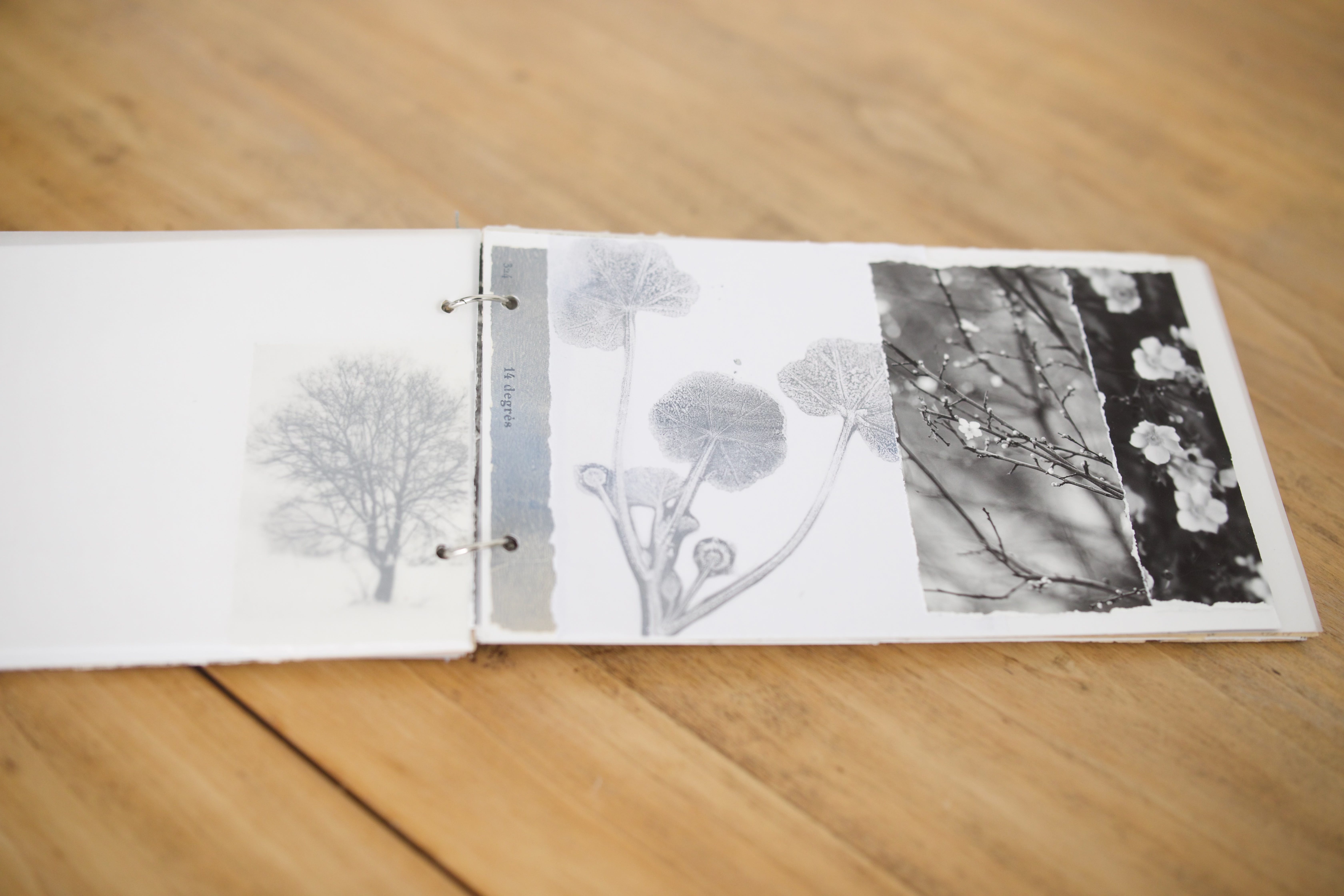
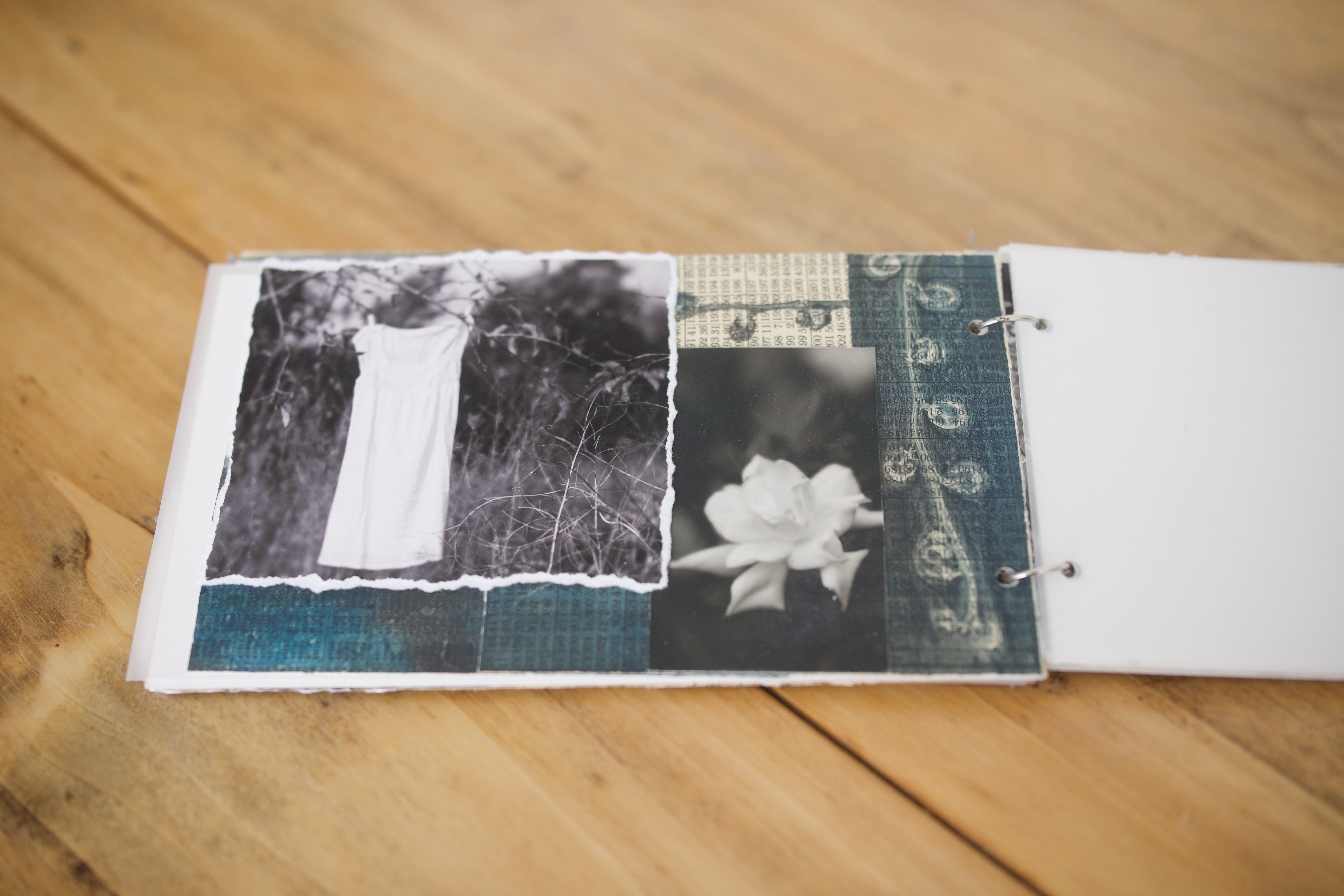
on s’abandonne à cette obscurité liquide, à la blancheur des feuilles,
(we succombe to the liquid darkness, to the whiteness of the pages,)
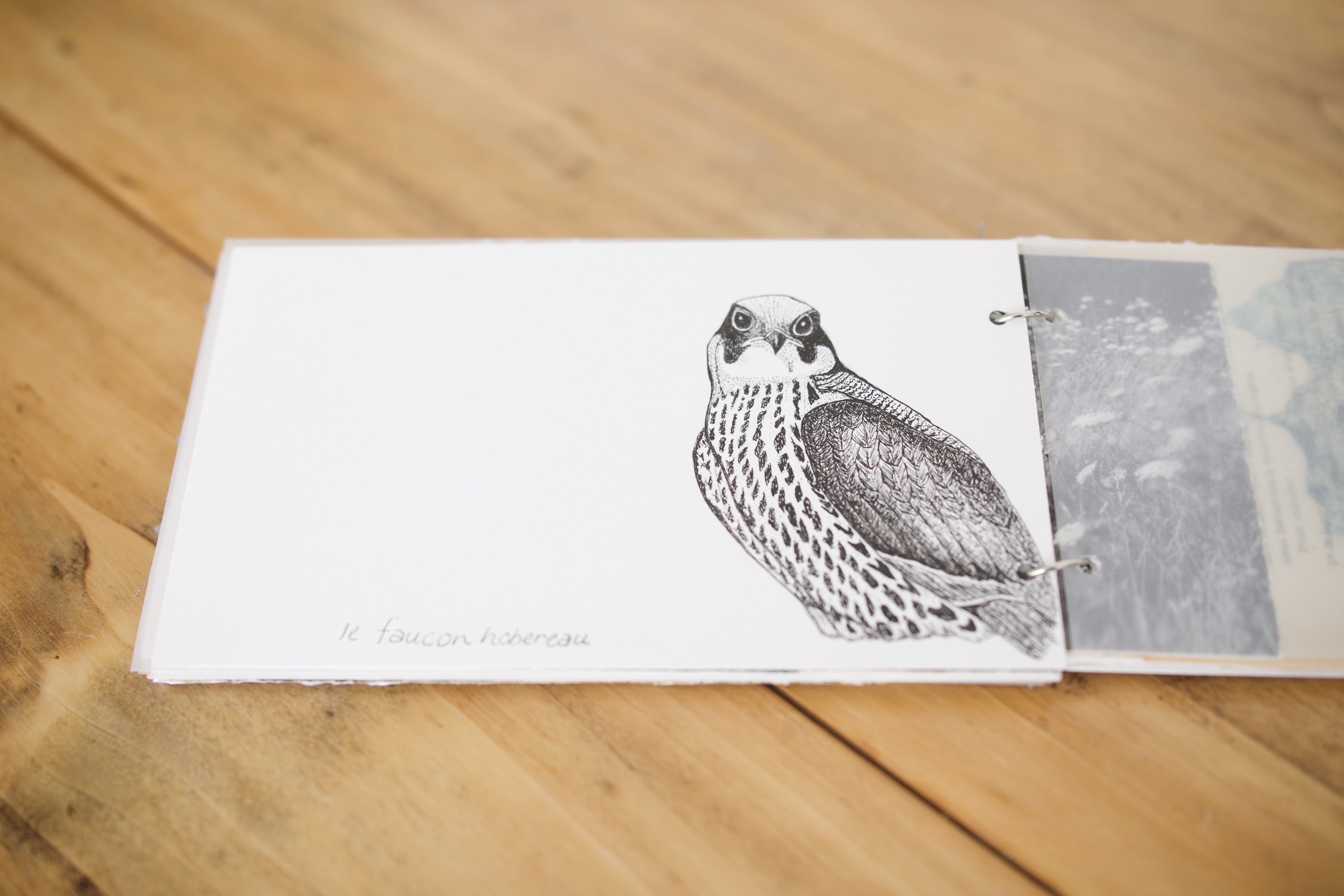
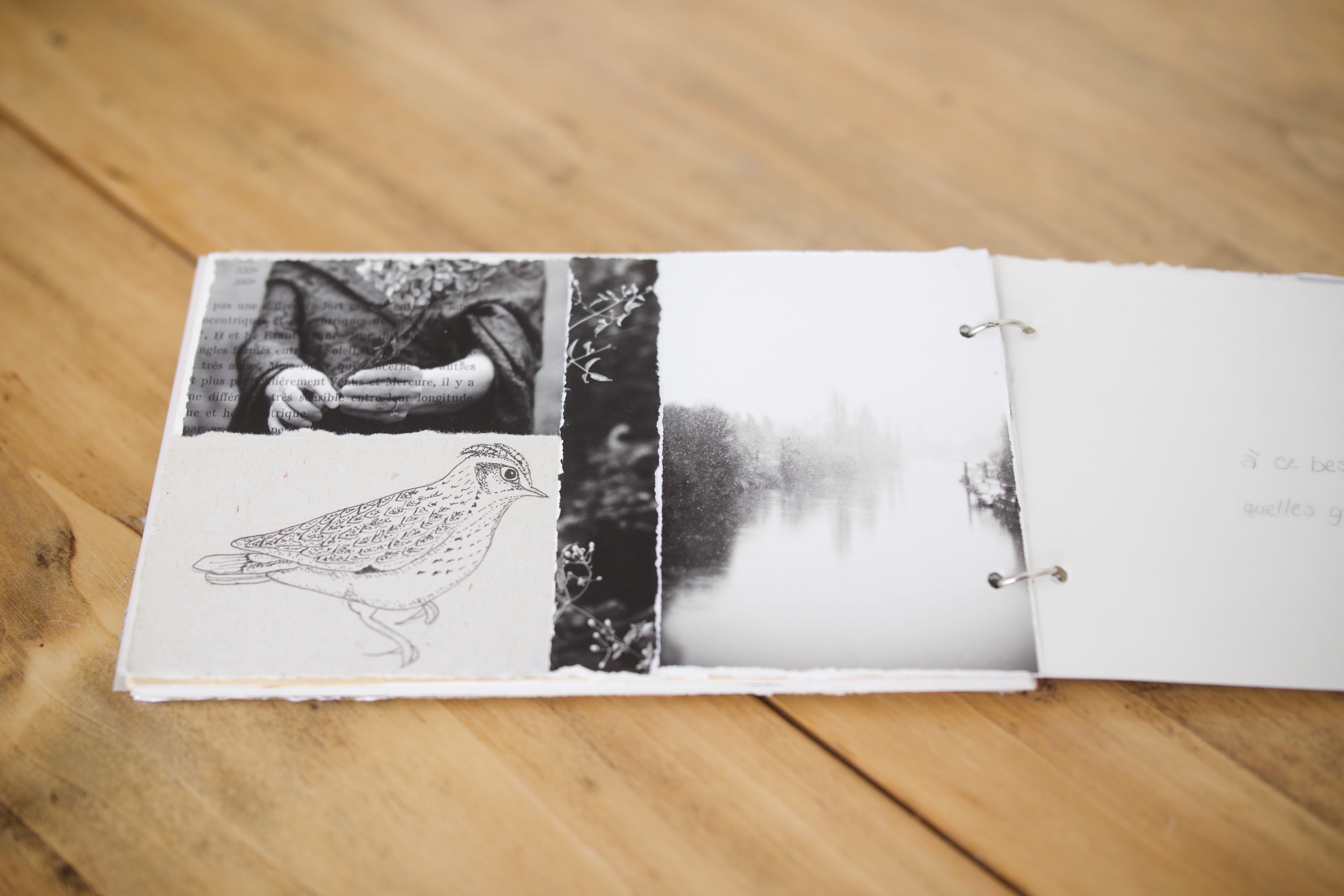
à ce besoin de laisser des traces,
quelles graines as-tu semées ?
(to this need to leave behind a trace,
what seeds have you sown?)
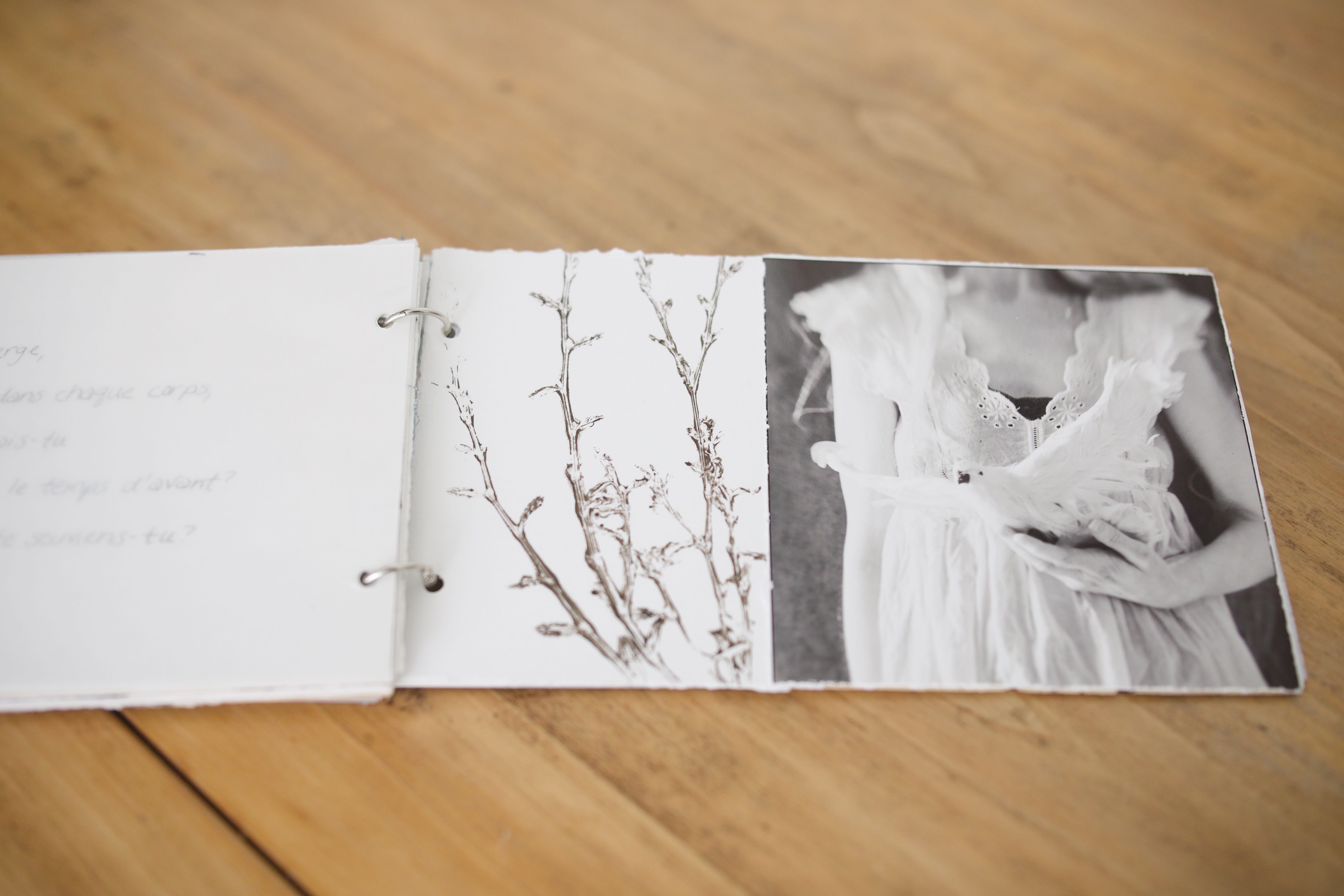
une forêt vierge cachée dans chaque corps
qui étais-tu dans le temps d’avant ?
(a virgin forest hidden in every body,
who were you in the time before?)
The last page reads:
et toi, mon enfant sauvage,
quel poème as-tu trouvé aujourd’hui ?
(and you, my wild child,
what poem did you find today?
…………………………………………………………………………………………………………………………………………………………
In closing, I’d invite you to think about these questions:
If the concept of re-wilding resonates with you or if the words of CPE resonate with you, how are these things showing up in your life? What steps can you take to reclaim that wild self?
And getting back to the artist’s book, what poem did you find today?
Thank you so much for being here!
Until next time,
Anne
The artist book looks so beautiful! I love the world re-wilding and I also love making up words. Thanks for sharing!
Dear Anne, I can't tell you how much this book speaks to me... Re-wilding speaks to me, especially now. The images conjoin in such a transitional way, much like how I envision re-wilding to be. "à ce besoin de laisser des traces, quelles graines as-tu semées?" literally gave me chills. There's an echo of responsibility with this phrase. Thank you so much for sharing this.